
Net Metering in Karachi 2026: New Rules, Net Billing & Complete Guide
If you are searching for net metering in Karachi in 2026, you may have heard that Pakistan’s solar billing system has changed. That is correct, but the new rules do not affect every solar customer in the same way.
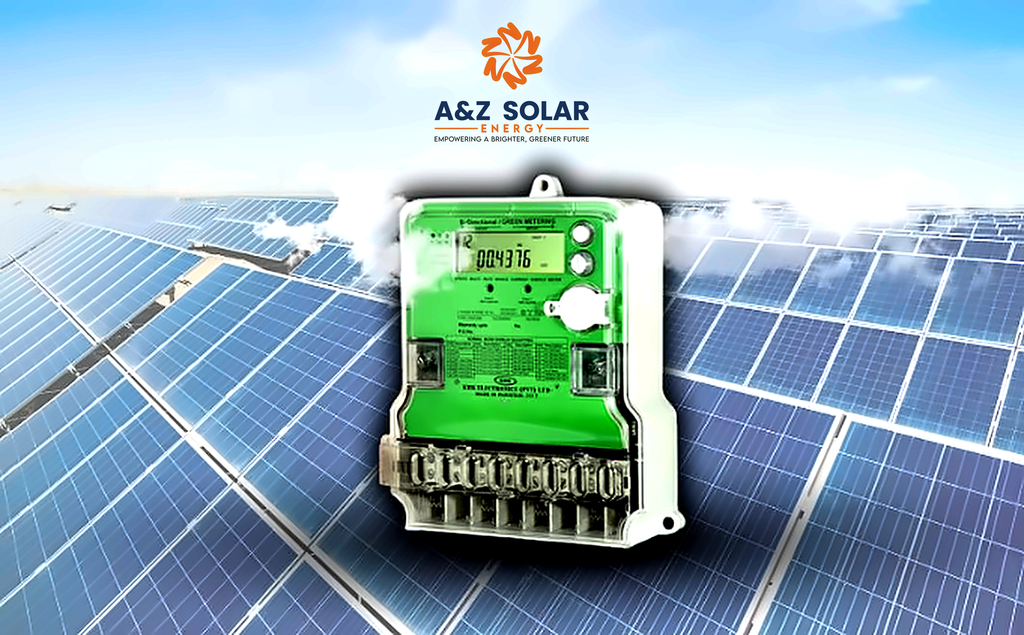
On February 9, 2026, NEPRA introduced the Prosumer Regulations 2026, replacing the previous framework for new solar installations with a net billing arrangement. However, customers who already had valid net-metering agreements before February 9, 2026 can continue under their existing arrangement until their agreement expires, subject to the applicable conditions and restrictions on material modifications.
For new solar customers in Karachi, the key difference is simple: electricity imported from the grid is billed at the applicable electricity tariff, while surplus solar electricity exported to the grid receives a separate credit based on the National Average Energy Purchase Price.
This guide explains the 2026 net metering and net billing rules in Karachi, how they work, what has changed, and what solar customers should know before installing a new system.
What Is Net Metering?
Net metering is a system that allows a solar customer connected to the electricity grid to send excess electricity generated by their solar panels back to the grid.
Solar panels normally produce the most electricity during daylight hours. If your home or business is not using all of that electricity at that time, the surplus can be exported to the grid through a bidirectional meter.
Under the previous net-metering arrangement, exported and imported electricity were effectively offset against each other according to the applicable rules. For example, if a solar customer exported 500 units and imported 600 units during the relevant billing period, the net difference could be used to determine the customer’s energy charges.
This 1:1-style arrangement helped make grid-connected solar particularly attractive for many consumers.
The 2015 net-metering regulations were repealed when NEPRA introduced the Prosumer Regulations 2026.
What Changed in Net Metering in Karachi in 2026?
The major change came on February 9, 2026, when NEPRA notified the Prosumer Regulations 2026.
For new prosumers, the billing arrangement is now based on net billing rather than the previous 1:1 net-metering mechanism.
Under the new framework:
- Electricity imported from the grid is billed at the applicable tariff.
- Electricity exported to the grid is credited at the National Average Energy Purchase Price.
- New prosumer agreements have a five-year term.
- A proposed distributed generation system cannot exceed the customer’s sanctioned load.
- The regulations apply to distributed generation facilities using solar, wind or biogas, subject to the applicable requirements.
- For systems of 25 kW or below, NEPRA concurrence is no longer required under the August 2026 amendment; approval is handled by the concerned licensee.
The important point is that net metering has not simply disappeared for everyone. Existing customers with protected agreements are treated differently from new applicants.
Net Metering vs Net Billing
The biggest difference between the two systems is how imported and exported electricity are valued.
Net Metering VS Net Billing in Karachi
Prosumer Regulations 2026 | Effective 9 February 2026
Export rate can be revised by NEPRA notification. Always confirm the latest rate before investing.
Sources: NEPRA Prosumer Regulations 2026, K-Electric FAQs | Updated September 2026
Previous Net Metering System
Under the previous arrangement, exported solar electricity could offset electricity imported from the grid under the applicable net-metering rules.
This meant that the value of exported electricity was closely linked to the electricity being offset.
New Net Billing System
Under the 2026 Prosumer Regulations, the two sides are valued separately.
Electricity that you import from the utility is billed according to the applicable tariff.
Electricity that your solar system exports to the utility is credited according to the National Average Energy Purchase Price (NAEPP).
This means the value of one unit exported to the grid can be significantly different from the price you pay for a unit imported from the grid.
What Is the Solar Export Rate in 2026?
One important point for solar customers is that the export rate should not be treated as a permanent fixed amount.
The 2026 regulations state that electricity supplied by the prosumer to the licensee is billed according to the National Average Energy Purchase Price, and NEPRA has the authority to revise the applicable rate through notification.
NEPRA’s 2026 power purchase price forecast shows a National Average Energy Purchase Price of Rs. 8.13 per KWH for the forecast year, while other published discussions of the 2026 framework have referred to rates around Rs. 10-11 per unit depending on the applicable determination and period. Therefore, customers should confirm the latest applicable rate rather than relying on one permanent figure.
For this reason, it is better to check the latest NEPRA notification before calculating the expected financial return of a new solar system.
What Happens to Existing Net-Metering Customers?
This is one of the most important parts of the 2026 policy.
If you already had a valid net-metering agreement before February 9, 2026, your existing agreement and applicable net-metering mechanism continue until the expiry of that agreement, provided there is no material modification to the distributed generation facility.
K-Electric’s published FAQs specifically state that existing distributed generators continue under the 2015 net-metering framework until agreement expiry, provided there is no material modification.
The April 2026 amendment clarified this protection for existing agreements.
Be Careful When Expanding an Existing System
Existing customers should be particularly careful before increasing the capacity of their solar system.
A material modification that changes the maximum electrical output of the approved distributed generation facility can affect the existing agreement’s protection.
If you already have a net-metering agreement and want to add more panels, increase inverter capacity or make another major modification, check the applicable K-Electric and NEPRA requirements before making changes.
Can You Still Install Solar in Karachi in 2026?
Yes, Customers in Karachi can still install solar systems and connect eligible distributed generation facilities to the electricity network.
However, new installations are processed under the Prosumer Regulations 2026, which use the net billing framework.
This means the financial calculation for a new solar system should focus more carefully on:
- How much electricity you consume during the daytime
- How much electricity your system is expected to generate
- How much solar electricity you use directly
- How much electricity you export
- Your applicable electricity tariff
- Whether battery storage makes sense for your usage
- Your system size and sanctioned load
What Is the System Size Limit?
Under the 2026 Prosumer Regulations, the proposed distributed generation facility cannot exceed the sanctioned load of the premises.
For example, if your sanctioned load is 10 kW, the proposed distributed generation capacity cannot exceed that sanctioned load under the current regulation, subject to the applicable regulatory requirements.
The regulations also state that the Authority may revise the permitted capacity through notification.
For larger systems, additional technical requirements may apply. For example, an applicant proposing a distributed generation facility of 250 kW or more is required to conduct and submit a load-flow study through the licensee or a reputable consultant registered with the Pakistan Engineering Council.
What About Systems of 25 KW or Less?
An important amendment was introduced on August 6, 2026.
NEPRA amended the Prosumer Regulations so that a prosumer with a distributed generation facility of 25 KW or below does not need to seek concurrence from NEPRA.
Instead, the concerned licensee can accord approval.
This is particularly relevant for many residential solar customers because household systems commonly fall within this capacity range.
How Does Net Billing Work?
Let’s use a simple example.
Suppose your solar system generates electricity during the day.
You use some of that electricity immediately to operate your:
- Air conditioner
- Fans
- Refrigerator
- Water pump
- Washing machine
- Other household appliances
If your solar system produces more electricity than you are using at that moment, the excess can be exported to the grid.
Under the new net billing arrangement:
Solar electricity used directly by you = avoids buying that electricity from the grid.
Solar electricity exported to the grid = receives the applicable export credit.
Electricity imported from the grid = billed according to the applicable tariff.
This is why understanding your consumption pattern is important when designing a new solar system.
How Can You Get Better Value From Solar Under Net Billing?
With net billing, system design should not simply focus on filling the entire available roof with solar panels.
Instead, your system should be designed around your actual electricity consumption.
1. Use More Solar During the Day
If your solar system is producing electricity at noon, try to use that electricity during the same period.
For example, you may be able to operate:
- Air conditioners
- Water pumps
- Washing machines
- Iron
- Kitchen appliances
- Other suitable loads
during daylight hours.
The more solar electricity you consume directly, the less electricity you need to purchase from the grid.
2. Consider Battery Storage
A hybrid solar system with battery storage can store excess solar electricity and make it available later.
This can be useful for customers who consume a large amount of electricity during the evening or night.
However, battery selection should be based on your actual load, usage pattern, backup requirements and budget.
3. Size the System According to Your Load
A larger solar system is not automatically better.
Your system should be designed according to your:
- Sanctioned load
- Electricity consumption
- Daytime usage
- Roof space
- Future electricity requirements
- Export expectations
- Battery requirements
A professional site survey and load analysis can help determine an appropriate system size.
4. Understand Your Electricity Bill
Before purchasing a solar system, review your previous electricity bills.
Look at your monthly units, major appliances and the times when your electricity consumption is highest.
This information can help your installer design a system around your actual requirements instead of simply recommending a larger system.
How to Apply for Solar Net Billing in Karachi
For Karachi customers, the relevant electricity distribution utility is K-Electric.
The Prosumer Regulations establish an application and interconnection process through the concerned licensee.
Generally, the process involves:
- Preparing the required application and technical documents.
- Submitting the application to the concerned licensee.
- The licensee reviewing the application for completeness.
- Technical review and interconnection assessment.
- Execution of the applicable agreement.
- Payment of applicable connection charges.
- Installation and commissioning of the interconnection facility and metering.
- Completion of the applicable approval process.
The 2026 regulations specify working-day timelines for different stages of the application and interconnection process.
For Karachi, customers should confirm the latest K-Electric application requirements before submitting an application.
What Meter Is Used for Solar?
The 2026 regulations require metering equipment capable of accurately measuring electricity flow in both directions.
A suitable bidirectional meter can record electricity imported from the grid and electricity supplied to the grid.
This allows the applicable billing system to calculate imported and exported electricity separately.
How Long Is a New Prosumer Agreement?
Under the 2026 Prosumer Regulations, a new prosumer agreement has a term of five years from the date of commissioning of the distributed generation facility.
The agreement may be renewed for another five year term and subsequent five-year terms with mutual consent of the prosumer and licensee.
This is different from the seven-year term associated with the previous framework.
Is Solar Still Worth Considering in Karachi in 2026?
The financial benefit of solar depends on several factors, so there is no single payback period that applies to every customer.
Your expected savings can depend on:
- System price
- Solar generation
- Electricity consumption
- Daytime self-consumption
- Exported electricity
- Applicable electricity tariffs
- Battery cost
- Battery usage
- Maintenance
- Financing, if applicable
- Future changes in electricity tariffs and export rates
For a new system under net billing, self consumption becomes particularly important because electricity used directly from your solar system avoids purchasing that electricity from the grid, while exported electricity is credited separately at the applicable export rate.
For this reason, customers should ask for a system design and financial estimate based on their actual electricity usage rather than relying on a generic payback claim.
What Should You Check Before Installing Solar?
Before purchasing a solar system in Karachi, consider the following:
Check Your Electricity Consumption
Review your recent electricity bills and identify your average monthly consumption.
Check Your Sanctioned Load
Your proposed distributed generation capacity cannot exceed the sanctioned load under the current regulations.
Understand Net Billing
Make sure you understand the difference between the value of electricity imported from the grid and the credit received for electricity exported to the grid.
Consider Battery Storage
If most of your electricity consumption happens after sunset, evaluate whether a hybrid system and battery can improve your self-consumption.
Verify Current Regulations
Solar regulations and applicable rates can change. Always confirm the latest NEPRA and K-Electric requirements before signing a contract.
Choose an Experienced Installer
Ask for a detailed quotation covering:
- Solar panels
- Inverter
- Mounting structure
- Protection equipment
- Installation
- Wiring
- Earthing
- Testing
- Commissioning
- Net billing/interconnection assistance
- Warranty
- After-sales support
Frequently Asked Questions
Is net metering closed in Karachi?
The previous net-metering framework is no longer the framework for new solar applications. New installations are processed under the 2026 Prosumer Regulations and use a net billing arrangement. Existing protected agreements can continue under the previous mechanism until expiry, subject to the applicable conditions.
Can I still install solar in Karachi in 2026?
Yes. Customers can continue installing solar systems. New installations are processed under the Prosumer Regulations 2026 and the applicable K-Electric process.
What is the difference between net metering and net billing?
Under the previous net-metering framework, exported and imported electricity were offset under the applicable rules. Under the new net billing framework, electricity imported from the grid is billed at the applicable tariff while exported electricity receives a separate credit based on the National Average Energy Purchase Price.
What happens to my existing net-metering agreement?
If your agreement was executed before February 9, 2026, the existing net-metering mechanism continues until expiry, provided there is no material modification to the distributed generation facility.
Can I add more panels to my existing net-metering system?
You should not make a material modification without first checking the applicable K-Electric and NEPRA requirements. A modification that changes the maximum electrical output can affect the protection available to an existing agreement.
What happens to excess solar electricity under net billing?
Exported electricity is credited at the National Average Energy Purchase Price. If the billed amount of exported electricity exceeds the billed amount of electricity supplied by the licensee, the net amount can be credited against the next billing cycle or paid by the licensee quarterly, according to the regulations.
Do systems under 25 kW need NEPRA concurrence?
Under the August 6, 2026 amendment, a prosumer with a distributed generation facility of 25 kW or below does not need to seek concurrence from NEPRA. The concerned licensee can accord approval.
Can my solar system be larger than my sanctioned load?
Under the current Prosumer Regulations, the proposed distributed generation facility cannot exceed the sanctioned load of the premises.
How long is a new prosumer agreement?
A new agreement has a five-year term from the commissioning date and may be renewed for further five-year terms with mutual consent.
Final Thoughts
Net Metering in Karachi 2026 is no longer the same system that solar customers became familiar with over the past several years.
For new solar customers, the Prosumer Regulations 2026 have introduced a net billing framework in which imported and exported electricity are valued separately.
At the same time, customers who already had valid agreements before February 9, 2026 have protections that allow their existing net-metering arrangement to continue until the agreement expires, subject to the applicable conditions.
For anyone considering solar in Karachi today, the most important step is to understand your own electricity consumption, sanctioned load and daytime usage before choosing a system.
A properly designed solar system should be based on your actual electricity requirements rather than simply maximizing the number of panels installed.
Before making a purchase, always confirm the latest NEPRA regulations, applicable export rate and K-Electric requirements because electricity regulations and tariffs can change over time.
Last Updated: September 2026
Official References
- NEPRA Prosumer Regulations 2026
- NEPRA August 2026 amendment
- K-Electric Prosumer Regulations 2026 FAQs